
Menu
Paterson Decorative Concrete: Stains, Stamps & Overlays
Decorative Concrete Paterson
Decorative concrete is changing how many people decorate homes and businesses in Paterson, using attractive, durable decorative finishes on top of concrete. Decorative concrete can be made to look as nice as (and for a lower price) than many of the most popular building materials, including natural stone, brick, wood flooring, etc. Property owners from the old town area to those located near Westside Park are finding limitless options by using color staining, concrete stamping and concrete overlays. When installed professionally, it provides years of service and stands up well against the varying weather conditions found throughout New Jersey. As such, decorative concrete provides both an aesthetically pleasing appearance and long-term durability, making it an intelligent investment option for any property owner.
Understanding Decorative Concrete Options
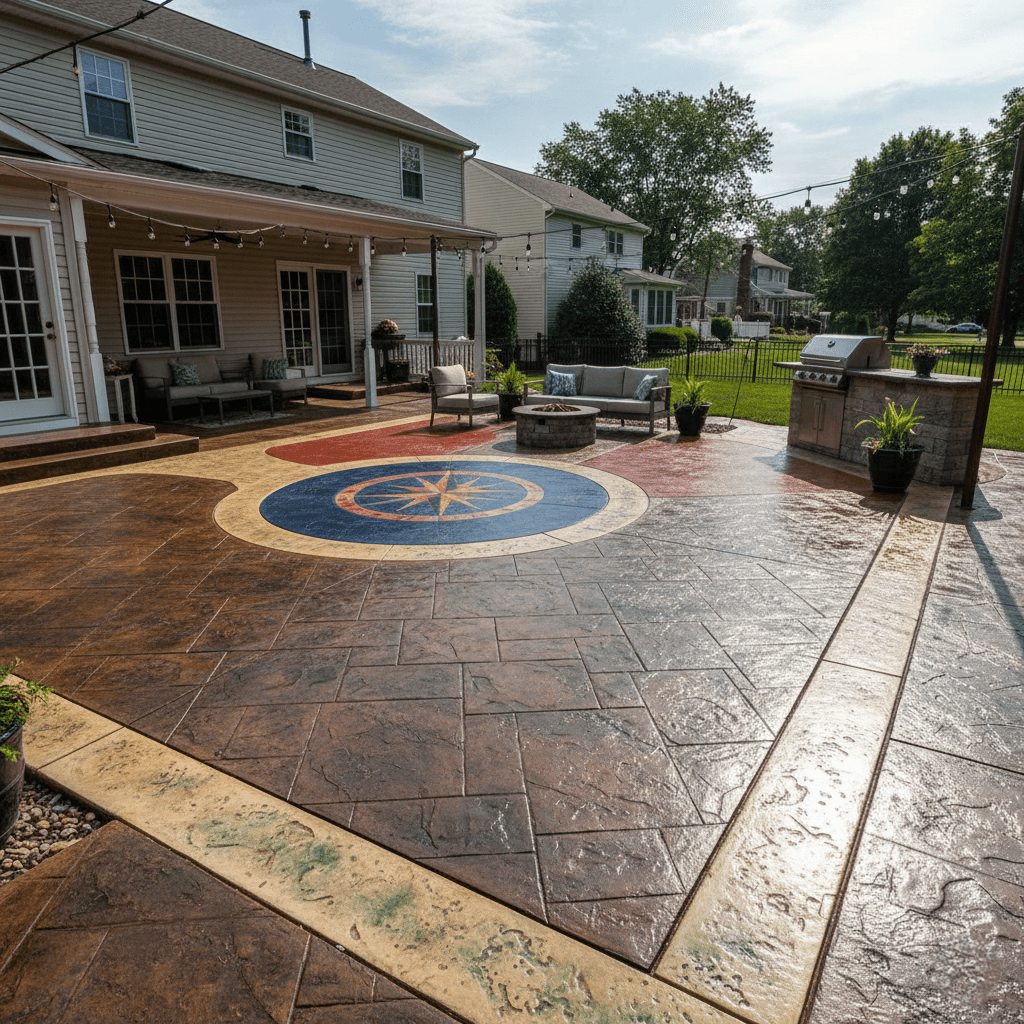
Decorative concrete employs three major processes (and many sub-processes) to create an endless number of styles. The first two are simple. Stains simply enter the topmost layer of the surface to produce vibrant, translucent colors, which help to draw out the natural qualities of the material. Stampers will imprint a variety of patterns and textures into the surface that mimic real-world building materials such as wood, tile, and stone. Overlays will lay a new layer of decorative material on top of old, worn-out surfaces that need to be restored to their former glory. All three processes have individual advantages based on what type of job you want to do and what your ultimate goal is for the completed surface.
Advantages of Using Decorative Concrete
When compared to other common materials (such as natural stone, brick pavers, and hardwood), decorative concrete is significantly more durable and requires much less maintenance than those alternatives over the course of its entire lifespan. Another advantage of decorative concrete is its cost-effectiveness; if you compare decorative concrete to one of the above-mentioned alternatives, you’ll see why. It also allows you to customize to fit any architectural style found anywhere in the city of Paterson. Decorative concrete is also completely resistant to weather-related damage (i.e., freezing temperatures, humidity, etc.), so whether you’re installing decorative concrete outdoors or indoors, you don’t have to worry about it losing its beauty due to environmental factors. Finally, applying a high-quality sealer to decorative concrete will protect your investment, keep your decorative concrete looking as good as it did when it was initially installed for years to come, and give you a sense of security knowing that your decorative concrete will last for generations.
Types of Concrete Staining Methods
There are primarily two types of methods used to apply color to concrete using staining. Acid-based stains react chemically with the mineral content in the concrete, thus causing it to permanently take on the color of the stain, resulting in the possibility of creating a multitude of natural, variegated color effects. Water-based stains have a broader color range and more consistent coverage than acid-based stains. However, the most notable difference between these two staining methods is that acid-based stains contain chemicals that could potentially harm people if they were exposed to them, whereas water-based stains do not contain any chemicals that pose a risk to people. Because of this, acid-based stains are generally limited to being used outside, while water-based stains can be used either inside or outside, depending on the circumstances. Both types of stains are penetrating; they will never flake off, chip, or fade as surface coatings may.
Acid-Stained Applications
Acid-stains are best suited to create a wide array of earth-toned colors that will go perfectly with the historic architecture of Paterson and the natural surroundings of the area. The chemical reaction involved in the staining process causes unique patterns to develop that can never be able to be duplicated. Therefore, every installation of acid-stained decorative concrete will have a unique look that no one else will ever have. Some popular colors that acid-stains are used to create include warm brown, rich amber, deep green, and classic terra cotta. Since the acid stain is permanently bonded to the surface, acid stains are perfect for high-traffic areas where the surface must be extremely durable. When applying acid stains, professional neutralization and cleanup must occur after the application process in order to safely remove the chemical residue from the surface, and to optimize the results.
Benefits of Water-Based Stains
In addition to offering a wider variety of colors, including blue, purple, and bright red, which cannot be achieved with acid-based stains, water-based stains also provide a safer alternative to acid-based stains because they do not contain harmful chemicals. Water-based stains are non-reactive and therefore provide more predictable results and allow for easier application in tight spaces. In addition, quick drying times result in shorter project timelines and less disruption to users of the space. Due to their environmentally friendly characteristics, water-based stains can be used in interior settings, as well as in exterior settings where there are restrictions on the use of chemical-based products. Additionally, the ability to mix and blend colors allows for the creation of custom hues that can satisfy almost any design requirement.
Popular Stamped Concrete Designs
Professional stamping transforms plain concrete into surfaces that accurately replicate the look of real-world building materials such as natural stone, brick, slate, and even wood planks. To accomplish this, the surface is pressed with special molds during the early stages of the pouring process, before it dries too much to still be malleable. By utilizing color hardeners and release agents to add realism to the pattern, as well as to provide added protection to the surface, the end user receives a realistic reproduction of the selected material. Borders and accents are also available to create sophisticated designs that add additional interest to the stamped patterns.
Common Stamped Design Patterns
- Ashlar Slate Pattern – Ashlar Slate Patterns provide the sophisticated elegance of cut stone with clean lines and a refined appearance.
- Random Stone Texture – Random Stone Textures create a natural look that blends perfectly with surrounding landscape features.
- Brick Pattern – Brick Patterns evoke a classic charm that is reminiscent of traditional architecture in many of Paterson’s older residential neighborhoods.
- Wood Plank Stamp – Wood Plank Stamps capture the warmth of hardwood, but with greater durability for use in exterior environments.
- Cobblestone Pattern – Cobblestone Patterns evoke an Old World charm to driveways and walkways.
Color Enhancement Techniques
Integral color that is blended throughout the concrete will provide a solid foundation of color that will complement the stamped patterns. Color hardeners that are applied to the surface will create the illusion of varying colors and highlight the texture of the surface. Release Agents will prevent the surface from adhering to the mold, but will also leave behind a slight color variation that will add to the natural appearance of the stamped pattern. The use of multiple colors to create layers of color will add to the authenticity of the stamped surface and will make it appear similar to natural materials. Skilled professionals will ensure that the colors that are chosen will harmonize with the colors of the surrounding architectural features.
Concrete Overlay Systems
Overlays are designed to breathe new life into existing concrete surfaces by restoring them to their original condition without the expense of replacing the entire surface. Thin overlay applications are commonly used and vary in thickness from 1/4 to 3/4 inch. Depending upon the thickness of the overlay, the surface can be stamped, stained, or textured to create an entirely new surface. The polymer-modified formulation that is used to manufacture the overlay will provide superior bonding properties and flexibility to prevent cracking and delamination of the overlay. The overlay can restore damaged surfaces while adding decorative elements that will turn old, worn-out concrete into attractive features.
Applications of Stampable Overlay Systems
Stampable overlays offer the convenience of renewing the surface of a structure while incorporating the decorative aspect of stamping in a single application. The overlay system can be applied directly onto sound concrete, and the surface can be stamped while it is still wet to create realistic textures. This is a very cost-effective way to restore driveways, patios, and pool decks without tearing them down and starting over. Varying thicknesses of the overlay can accommodate the needs of different stamping requirements and various surface conditions. A professional installer will ensure that the overlay is properly attached to the substrate and will perform as expected for years to come.
Spray Applied Overlay Systems
Spray-applied overlay systems provide a uniform coating for large areas while allowing for numerous color and texture combinations. The spray application method will provide a uniform thickness and eliminate the possibility of having to deal with trowel marks, thereby creating a smooth finish. Spray-applied overlay systems are ideal for use on vertical surfaces and complex architectural details. Quick application times will save on labor costs while producing professional results. Multiple coats can be applied to achieve the desired thickness and appearance of the overlay.
Combining Techniques and Creating Customized Effects
Many decorative concrete installations will utilize a combination of techniques to create a truly unique and customized effect. For example, the basic texture created by stamping the surface can be enhanced by adding accent coloring with a stain, thereby creating a multi-dimensional effect throughout the surface. The borders around the surface can be defined by using a different pattern or color, thereby adding architectural detail to the overall design. Geometric shapes can be created by cutting saw blades through the surface of the concrete, and will add a touch of modernism to any design. Hand-carved details can add a touch of artistry to the surface and demonstrate the skills of the craftsman.
Techniques Used to Create Layers of Color
Applying multiple layers of color will provide the professional decorator with the capability of developing complex color schemes that are comparable to the colors of expensive natural materials. The first layer of color is known as a “base wash” and will establish the overall color tone for the rest of the colors. Accent colors will be used to highlight specific areas or create focal points. Antiquing techniques will add a touch of age and character to new surfaces and create a timeless appeal. Highlighting and lowlighting will add dimension to the surface, nd further enhance the textures of the stamped surface. Applying multiple layers of stain will create rich, complex coloration that will continue to develop over time.
Maintenance and Long-Term Performance of Decorative Concrete
If properly maintained, decorative concrete surfaces will remain beautiful and functional for decades with little to no maintenance required. Cleaning the surface of the decorative concrete with the correct cleaning products will preserve the appearance of the surface while preventing staining and damage to the surface. Re-sealing the surface periodically will protect the surface from moisture penetration and freeze/thaw damage. Professional maintenance services will ensure optimal performance and extend the life of the decorative concrete surface. High-quality installations supported by warranty provisions will give homeowners peace of mind and long-term value.
Protective Sealers
Quality protective sealers will protect decorative concrete from moisture penetration, freeze/thaw damage, and surface staining. There are several types of protective sealers available, including acrylic sealers, polyurethane sealers, and penetrating sealers. Protective sealers can be easily applied and maintained, making them ideal for protecting decorative concrete. Quality protective sealers will protect the decorative concrete surface for years to come and preserve the original beauty of the surface.
Installation Considerations of Decorative Concrete
To successfully install decorative concrete, a contractor must have experience in all phases of decorative concrete installation, including the knowledge of how to properly prepare the surface, select the right materials, and select the right techniques. Professional contractors will know how to properly prepare the surface prior to installing the decorative concrete to ensure optimal adhesion of the decorative concrete to the surface. They will also know how to determine the impact of weather on the working time and final results of the decorative concrete installation. Quality control measures will be implemented throughout the installation process to ensure that all phases of the decorative concrete installation meet professional standards and manufacturers’ specifications. A comprehensive final inspection will be performed after the decorative concrete installation is complete to ensure that the decorative concrete installation meets the owner’s design expectations. Professional installation of decorative concrete will include the proper curing and sealing of the decorative concrete, as well as a thorough final cleaning of the surface.
Planning for Decorative Concrete Installations
Before beginning a decorative concrete installation, a detailed plan should be developed to address all variables that will impact its success, including site conditions, design objectives, and maintenance requirements. Once the plan is developed, the materials to be used for the decorative concrete installation should be carefully selected based on the intended use, aesthetic requirements, and budget constraints of the owner. The timing of the decorative concrete installation should be carefully coordinated to ensure that the decorative concrete is properly cured and that the surface is prepared to receive the decorative concrete. Quality assurance procedures will be followed throughout the decorative concrete installation to ensure that all phases meet professional standards and manufacturer specifications. Documentation will be provided for all phases of the decorative concrete installation for reference purposes for future maintenance and repair.
Paterson Concrete Works specializes in all phases of decorative concrete installation, including staining, stamping, and overlay systems. We understand the unique architectural characteristics of the City of Paterson and will create customized decorative concrete solutions that will enhance the value of your property, while providing years of beauty and function.
LATEST POSTS