
Menu
Paterson Commercial Concrete: Prefab vs Cast-in-Place
Commercial Concrete Paterson
Businesses in Paterson are faced with difficult choices when selecting a commercial concrete construction method for their buildings. The selection of whether to use prefabricated or cast-in-place concrete will affect the project’s timeline, cost, quality control, and long-term performance. Both of these types of construction have their own strengths and weaknesses, which apply to various business needs and project requirements within Paterson’s many commercial areas, including its busy downtown area close to the Great Falls, as well as in Paterson’s industrial areas located along the Passaic River. This knowledge of the difference between the two types of commercial concrete construction will allow businesses to make informed decisions about the best course of action to meet the objectives of their projects.
Prefabricated Concrete Overview
Prefabricated concrete is a building process in which manufactured products are produced in a controlled factory setting before being transported to a building site for assembly. By controlling every aspect of the product, this system assures that quality will be consistent from one unit to another, and that the best curing conditions will exist for the concrete. Factory production also removes many variables present at a construction site (i.e., weather) that frequently impede the construction process in New Jersey’s unpredictable climate. In addition to the advantages provided by the controlled environment, quality control of prefabricated concrete is facilitated by strict testing and inspection policies implemented during the manufacturing process.
Assembly Line Production Process
The prefabrication process begins with detailed engineering plans that define the size and structural requirements of each component to be produced. These detailed plans enable the specialized molds used to produce the various types of prefabricated units, such as walls, floors, beams, etc. Each high-strength concrete mix is formulated to contain special additives that improve its durability and performance properties. The rebar for each component is placed in accordance with precise specifications and inspected during the placement process. Once the rebar has been placed, each component is cured under ideal temperature and humidity conditions to achieve the highest degree of concrete strength.
Delivery and Installation
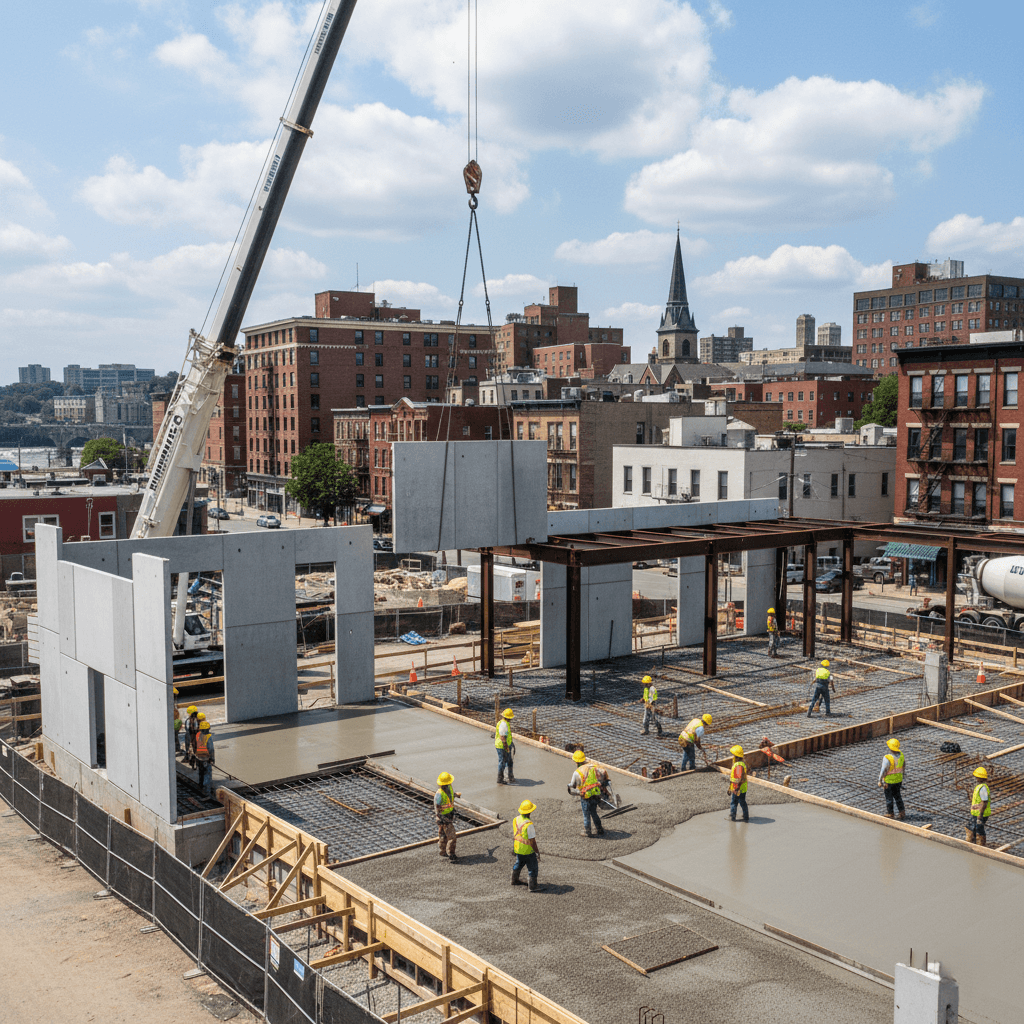
Each prefabricated unit is delivered to the job site via specialized vehicles and then positioned on the job site with cranes operated by trained personnel. The crane operators must coordinate their efforts carefully to place each heavy prefabricated unit safely and precisely. After each unit is positioned, installation personnel use specialized equipment to align and connect the unit to adjacent structural elements. In general, the number of on-site employees required to assemble prefabricated units is significantly less than that required to pour cast-in-place concrete. As with any building process, professional installation is essential to ensure that the finished structure is structurally sound and meets all local building codes.
Cast-in-Place Concrete Process
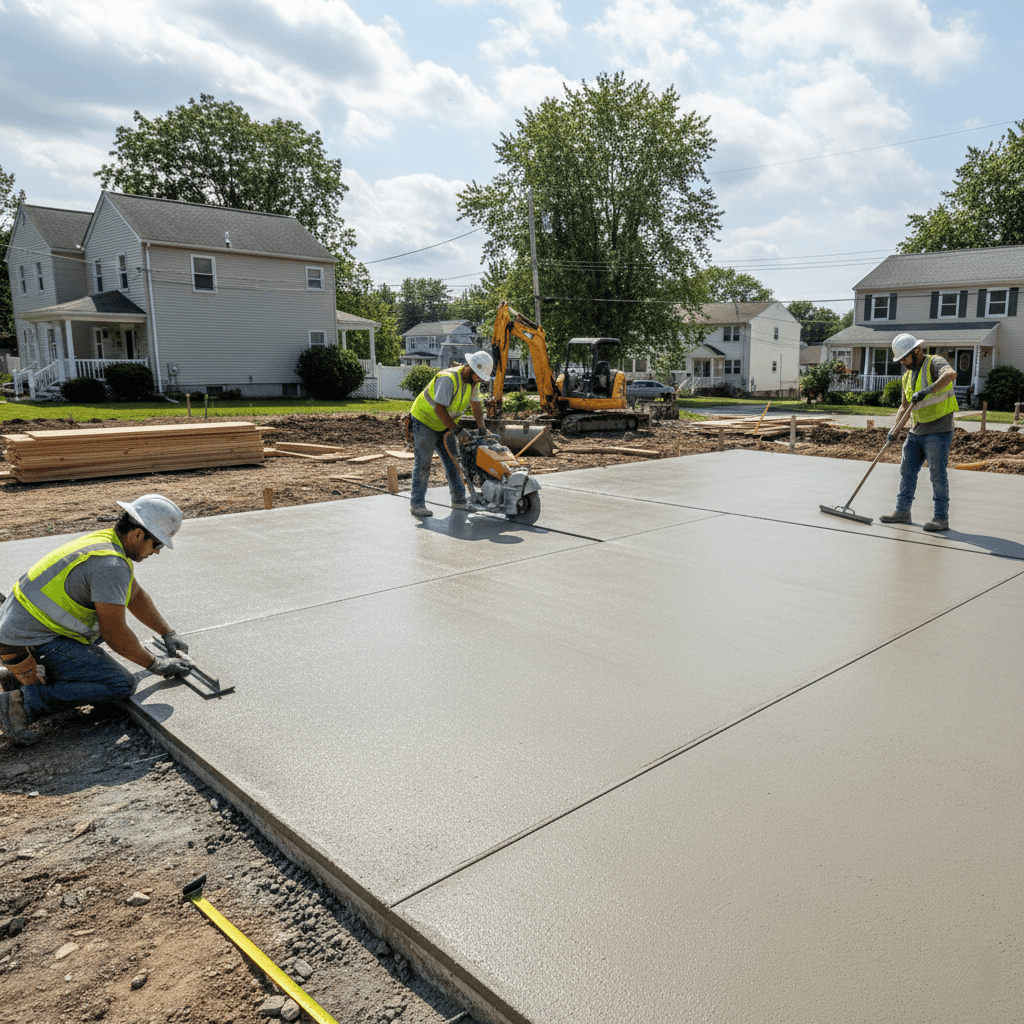
Cast-in-place concrete involves pouring concrete directly into forms located at the construction site, where it cures in its final location. While this traditional building method offers the ability to make design changes on an as-needed basis and to adapt to site-specific conditions, it can also be much more expensive than prefabricated units. The fact that cast-in-place concrete is poured directly onto the job site means that on-site mixing of concrete can be done as needed to adjust for changing site conditions and/or project requirements. The monolithic nature of cast-in-place construction allows for seamless connections between individual structural elements. However, because this type of construction is performed entirely on-site, there is no third party involved to oversee the entire process, from form preparation and placement of rebar to completion of the concrete and curing of the finished surface.
Preparation of Site and Form Work
Before beginning any part of the cast-in-place concrete process, the site must be prepared to allow for the safe movement of people and equipment, and to facilitate the placement of forms and reinforcement. Engineered panel and support systems are utilized to create the formwork necessary to shape the concrete to the desired specification. It is the responsibility of the installer to position the rebar within the forms so that it complies with the specified layout as shown on the structural drawings. Prior to placing the concrete, the quality of the reinforcement placement must be verified to ensure that the correct spacing, coverage, and connection have occurred. Utilizing professional formworkwill help to ensure that the dimensions and finish of the exposed surfaces of the concrete are accurate and aesthetically pleasing.
Placing and Finishing Concrete
Ready-mix concrete delivery trucks transport the pre-mixed concrete mixture directly to the location of placement via pumps or conveyor systems. Experienced finishers work to quickly level, smooth, and texture the surface of the concrete while it is still workable. Adequate consolidation of the concrete will eliminate air voids and ensure that the rebar is fully encapsulated. The timing of the placement process is extremely important, since the workability of the concrete decreases as temperature increases and time passes. Professional placement of the concrete will ensure the structural integrity of the finished surface and overall quality of the concrete.
Benefits of Prefabricated Concrete
The first major advantage of prefabricated concrete lies in its quality control. Because prefabricated units are manufactured in a controlled environment, they are able to utilize standardization in the production process to consistently produce units that exhibit the same strength and durability properties. Additionally, by utilizing prefabricated units, the quality of the finished product is greatly improved, since the production process is subject to rigid testing and inspection procedures. Lastly, the controlled environment of the factory provides the opportunity to utilize highly technical, computer-controlled mixing ratios, proper curing temperatures, and systematic placement of reinforcement.
Efficiency Benefits
By arriving on-site “ready-to-go” (i.e., already assembled), prefabricated units eliminate the need for on-site curing times. Since multiple units can be produced simultaneously with site preparation activities, parallel production maximizes factory efficiency. Typically, assembly of prefabricated units will take 40% less time than the equivalent cast-in-place construction process. Therefore, the quicker construction schedule will result in less business interruption and a sooner occupancy date. Regardless of the season, weather will not impact the construction schedule of prefabricated units, providing consistent productivity.
Economic Benefits
Through the factory-based production of prefabricated units, labor costs are minimized through the use of assembly line production techniques and the specialization of skilled labor. Purchasing bulk materials is less expensive than delivering smaller quantities to a construction site. A faster construction schedule will decrease financing costs and overhead expenses incurred during the construction process. Although defects resulting from the construction process can be costly, the quality consistency of prefabricated units will eliminate costly repairs and callbacks associated with defects. Finally, the increased durability of prefabricated units will result in lower maintenance costs over the life of the building.
Benefits of Cast-in-Place Concrete
Flexibility in Design
Flexibility in design is the greatest advantage of cast-in-place concrete for creating unique architectural designs. Using adaptable formwork systems, designers can create complex geometric shapes, curved surfaces, and custom designs that cannot be created with prefabricated units. Additionally, cast-in-place units can be modified on-site to accommodate unexpected design changes or site-specific requirements. The surface finish of architectural concrete can be tailored to create a distinctive appearance that enhances the beauty of the building.
Structural Performance
One of the advantages of cast-in-place concrete is that the structural elements are constructed as a single unit, eliminating potential weak points that can develop at the connections between separate structural elements. This feature provides excellent resistance to seismic forces, as well as excellent bond strength between the concrete and reinforcing steel. Therefore, cast-in-place concrete exhibits excellent structural behavior. The designer can tailor the reinforcing pattern to match the loads applied to the structure, as well as the architectural requirements of the structure. Compliance with local building codes and industry standards is ensured through the involvement of professional engineers.
Adaptability of Sites
Construction of large or complex structural elements that exceed the transportation limitations of prefabricated units is made possible through cast-in-place construction. Construction in irregularly-shaped sites with limited access is also more feasible using cast-in-place methods than using prefabricated units. Integration of cast-in-place structural elements with existing structures is simpler than integrating prefabricated units. Coordination of utilities and embedding of utility lines into the concrete is easier during the construction of a cast-in-place structure than with prefabricated units. Additionally, the ability to solve problems on-site immediately will aid in resolving unforeseen site-specific problems that may arise during construction.
Comparison of Costs
Although initial material costs for large-scale projects with many identical structural elements favor prefabricated units, labor costs for installing prefabricated units are generally lower than the labor costs required to install cast-in-place structural elements. In addition to the lower labor costs, transportation costs are added to prefabricated projects; however, these costs are usually offset by the lower labor costs required to assemble prefabricated units on-site. Faster construction schedules that result from the use of prefabricated units will also decrease carrying costs and shorten the time period that funds must be invested in the project to obtain the earliest possible cash flow. Ultimately, the total cost of a project will depend upon the unique combination of requirements, size, and complexity of the project.
Value Over Time
Both prefabricated and cast-in-place concrete construction require very little maintenance if installed and designed correctly. The quality control and consistency inherent in prefabricated units may lead to fewer warranty claims and callbacks than cast-in-place construction. Although cast-in-place construction provides flexibility for making changes to a building over time, the quality and functionality of either method of construction are reflected in the resale value of the building.
Suitability of Application
Large warehouse and distribution centers can benefit from prefabricated units that provide the necessary space to allow for the free movement of equipment and personnel. Offices are often built using cast-in-place units to accommodate complex architectural details and custom floor plans. Retail developments are determined based on design requirements and construction schedule requirements. Industrial facilities require durable and functional units that can be provided through both methods of construction. Mixed-use developments may be built using a combination of both prefabricated and cast-in-place units to optimize different areas of the building.
Considerations of Scale
Projects that involve large numbers of similar structural elements will favor the use of prefabricated units that can take advantage of factory efficiency. Smaller to medium-sized projects will likely prefer the use of cast-in-place units due to the expense of setting up a form-work system. Projects that require architectural details or unusual shapes will favor the use of cast-in-place units for the necessary flexibility. Restoration projects in downtown Paterson will favor the use of cast-in-place units due to their ability to be integrated into existing structures. A thorough analysis of the project specifics will determine which method is most suitable for each particular situation.
Factors of Environmental and Sustainability
Both prefabricated and cast-in-place units can contribute to sustainability in the building process. Prefabricated units reduce waste generation by reducing excess material usage through the controlled environment of the factory. The transportation of prefabricated units does generate some greenhouse gas emissions, but these emissions should be weighed against the reduction in on-site disruptions caused by the faster construction schedule of prefabricated units. The use of recyclable materials and sustainable concrete mixes is also easier to accomplish in a factory environment. Cast-in-place units generate less energy to transport than prefabricated units, but they do produce more construction waste.
Considerations of LEED and Green Buildings
Both prefabricated and cast-in-place units can incorporate sustainable materials and design features that contribute to the environmental performance of a building. Factory production of prefabricated units allows for greater incorporation of recycled materials and sustainable concrete mixes. The rapid construction time of prefabricated units also minimizes environmental disruption during the building process. The ease of implementing energy-efficient designs is enhanced through prefabricated building envelopes. Local materials can be sourced for both methods of construction, depending on the proximity of suppliers and manufacturers. Consultation with professionals in the area of green building will assist in achieving optimal environmental performance in the selection of either method of construction.
Inspection and Testing of Quality
Prefabricated units are thoroughly tested and inspected in the factory before shipping to the job site. Due to the fact that cast-in-place units are built on-site, quality is dependent on the skill level of the site supervisor and the quality of the testing conducted during the construction process. Third-party inspection services verify compliance with the project specifications and local building codes for both prefabricated and cast-in-place units. Material testing includes the verification of strength, durability, and performance characteristics. Quality assurance programs for both methods of construction are designed to ensure consistent quality that meets the project requirements.
Standards of Performance
Specifications for the structural performance of buildings are consistent regardless of whether the building was constructed using prefabricated units or cast-in-place concrete. The requirements for fire-resistance, durability, and safety apply equally to both methods of construction. Industry standards govern the manufacturing process, installation procedures, and the inspection requirements for both prefabricated and cast-in-place units. Professional engineers monitor the quality of both methods of construction to ensure compliance with all applicable building codes and regulations. Regular monitoring and maintenance of both methods of construction will ensure that the performance characteristics of the building will continue to meet the project requirements over its service life.
Professional assistance from Paterson Concrete Works will guide you in determining the best choice for your commercial concrete needs, balancing performance, cost, and time requirements. We offer comprehensive evaluation services that consider all aspects of your project and local conditions to recommend the most appropriate method for your specific needs.
LATEST POSTS