
Menu
Paterson Concrete Retaining Walls: Cost & Materials
Concrete Retaining Wall Paterson
Projects that involve concrete retaining walls in Paterson are typically time-consuming and costly for a homeowner to plan and budget in order to accomplish them. Homeowners throughout the city have problems with sloping backyards, drainage, and soil erosion near many of the city’s public landmarks, including Hinchliffe Stadium and Eastside Park. Knowing all of the costs involved in your retaining wall project will allow you to make an educated decision on how much money you want to invest in your retaining wall project. The overall project cost comprises the materials needed, labor involved, cost of any required permits, and cost associated with preparing the site before construction begins. The professional installation of a retaining wall ensures it can be safely constructed and meets or exceeds local building code requirements.
Concrete Retaining Walls in Paterson – Factors Influencing Installation Costs
Paterson is home to numerous homes with sloping lots. For those looking to stabilize their lot, one of the most common methods to do this is by installing a retaining wall. As it pertains to the cost associated with the installation of a concrete retaining wall, there are several factors that contribute to how much you will pay for the installation. While the cost can vary based on several factors, such as wall height, location, and design, the average cost of installing a concrete retaining wall in Paterson is between $20 and $45 per square foot installed.
With respect to wall height, walls that stand taller require deeper footings, which increases the amount of excavation needed and, thus, increases the overall cost of the installation. In addition to excavation costs, taller walls also require additional reinforcing to help support the wall, further increasing the overall cost of the installation.
As it pertains to design, curved walls or terraced walls have a higher cost than a straight wall due to increased labor and materials required. Also, when the site where the wall will be constructed has poor access, it increases the cost of the installation, particularly if equipment must be brought in to assist with the installation.
Soil Conditions
In addition to the above-mentioned factors, the type of soil where the wall will be constructed plays a significant role in determining the overall cost of the installation. Soils that drain poorly, are unstable, or have expansive properties can greatly affect the cost of the installation. When these types of soils exist, additional steps may be necessary to ensure the wall remains stable and does not shift or settle after the installation is completed.
Water Table and Hydrostatic Pressure
The cost of the installation also depends on whether the water table exists beneath the proposed wall location. If it does, then additional costs will be incurred to install a drainage system to alleviate hydrostatic pressure against the wall. This will result in additional excavation, drainage piping, and gravel being placed behind the wall.
Material Costs
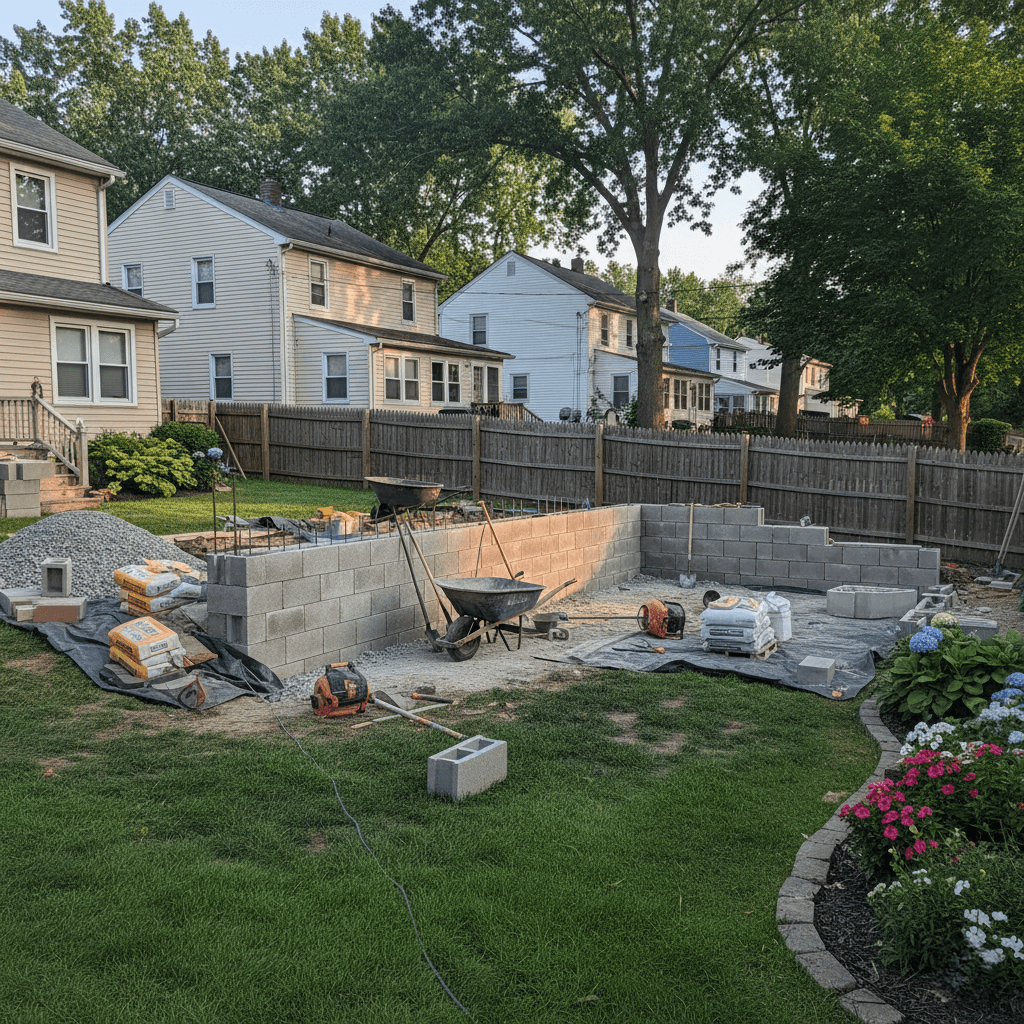
When considering the cost of a retaining wall installation, the cost of the materials used for the installation accounts for approximately 40-50% of the total project cost. As it relates to concrete retaining walls, the cost of poured concrete can range anywhere from $3 to $5 per square foot for materials alone. In contrast, concrete blocks can cost anywhere from $2 to $10 per block, depending on the size and style of the block selected.
Interlocking concrete blocks are an excellent choice for retaining wall construction because they can be easily installed while still providing the structural integrity needed for stability. Rebar (reinforcing steel) adds $1.50 to $2.50 per square foot to the material cost of the installation.
Required Concrete Materials
- For poured concrete walls, ready-mix concrete provides consistent quality for the entire wall installation.
- Concrete blocks are available in a variety of sizes, including the standard 8-inch unit to larger architectural blocks.
- Steel reinforcement is added to provide structural stability to walls that exceed 4 feet in height.
- Waterproofing membranes are applied to the wall to protect it from moisture damage and to extend the lifespan of the wall.
- Drainage gravel and piping are installed to prevent water accumulation behind the completed wall.
Labor and Installation Costs
Professional labor accounts for 50-60% of the total cost of a concrete retaining wall installation in Paterson. Skilled contractors can charge anywhere from $10 to $25 per square foot for installation services. Additional costs include excavation work ($100 to $220 per cubic yard for site preparation). Poured concrete walls require specialized forming equipment and experienced crews to install them properly. Block walls require precise leveling and proper alignment to function optimally.
Installation Process Expenses
Prior to constructing the wall itself, excavation and site preparation must be completed to establish a solid foundation. Concrete footings are built into the ground to anchor the structure and distribute the weight evenly along the base of the wall. The form construction process creates the desired shape for poured concrete installations. Curing the poured concrete requires time and proper moisture control to develop the maximum strength possible in the finished product. After the wall is completed, backfilling and grading restore the landscape to its previous condition.
Paterson Permit Requirements and Fees
Retaining wall construction in Paterson is subject to permitting requirements established by the City of Paterson through the Uniform Construction Code Division. A zoning permit is required for retaining walls less than 4 feet in height at a minimum cost. All other walls require a full construction permit and the approval of a licensed engineer. Residential retaining walls measuring 549 square feet or less require a $95 permit fee. Larger residential walls exceeding 550 square feet require a $189 permit fee.
Permit Application Process
All permit applications require current property surveys and detailed construction plans submitted for review. A plan review fee representing 20% of the original permit cost applies to all projects. Before issuing the permit, property owners are required to submit a tax clearance certification. Engineering calculations are required for walls greater than 4 feet in height. Scheduled inspections occur at designated stages of the project to confirm compliance with local regulations and codes.
Drainage and Foundation Requirements
An effective drainage system is essential to prevent water damage and ensure long-term stability of the wall. French drains cost $10 to $80 per linear foot and vary in price depending on installation complexity. Concrete footings extend below the frost line to prevent freeze/thaw damage caused by freezing temperatures during the winter months. Gravel backfill provides drainage and decreases hydrostatic pressure behind the wall. Weep holes allow water to escape and, ultimately, prevent structural failure over time.
Foundation Specifications
Typically, the depth of the concrete footing ranges from 1.5 to 2 feet for walls that are 4 to 8 feet in height. The width of the footing should be the same as the wall thickness plus an additional 12 inches to provide sufficient stability. Reinforcement steel extends through both the footing and wall sections to provide structural continuity. A well-compacted gravel base provides adequate drainage and eliminates the possibility of settlement problems. Preparation of the foundation accounts for 15-20% of the total project cost.
Design Options and Upgrades
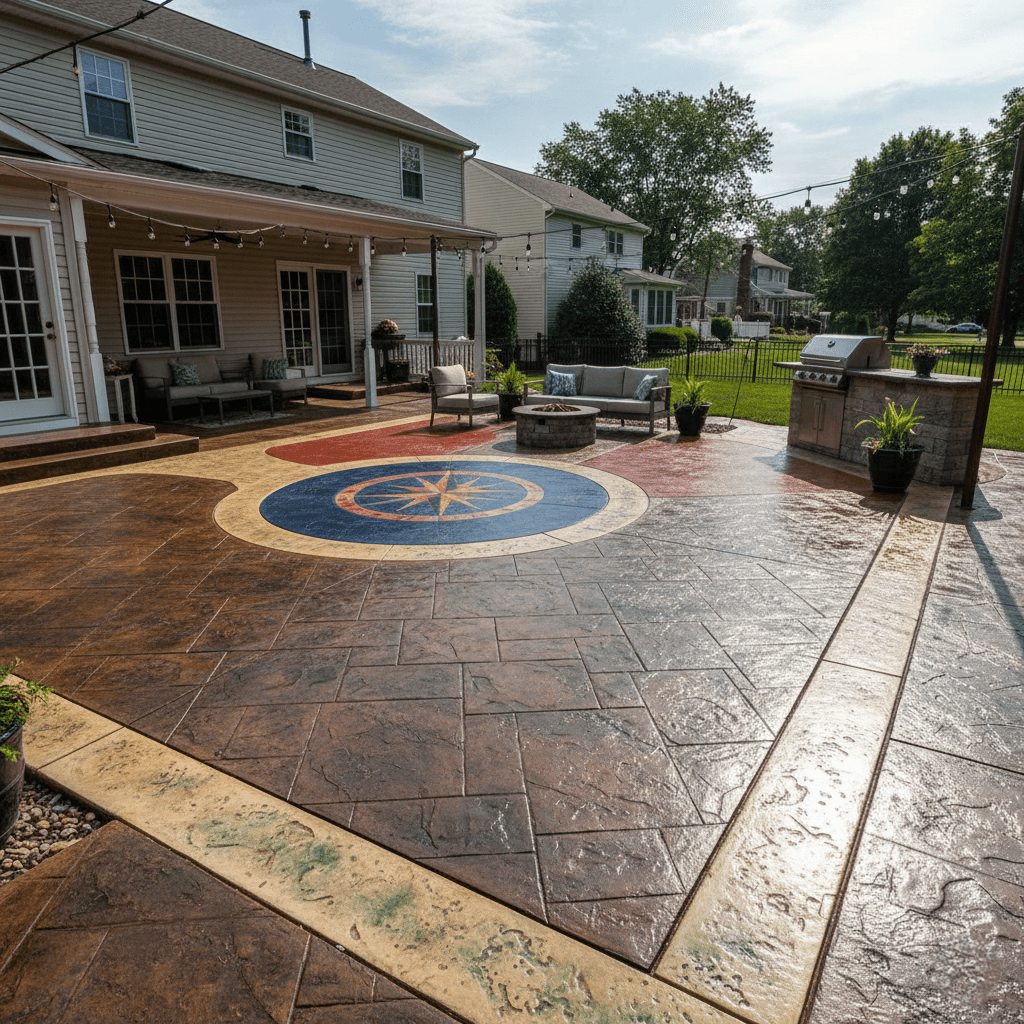
Stamped concrete finishes add aesthetic appeal and increase costs by $5 to $15 per square foot. Decorative concrete blocks offer various textures and colors to match the surrounding landscape. Stone veneer applications provide a natural look and feel, and increase the cost of the installation by $10 to $45 per square foot. Integrated planters and seating areas enhance functionality while increasing the overall cost of the installation. Landscape lighting systems illuminate the architectural features of the wall during evening hours.
Aesthetic Enhancements
Colored concrete finishes create unique appearances that complement the surrounding landscape design. Textured finishes simulate the appearance of natural stone or brick but are significantly less expensive. Stepped or terraced designs accommodate steep slopes and provide visual interest. Curved walls create flowing lines that complement organic garden designs. Integrated caps and coping protect the top of the wall and provide architectural details.
Maintenance and Longevity
High-quality concrete retaining walls last 50 to 100 years with minimal maintenance requirements. Annual inspections help identify potential problems prior to becoming costly repairs. Maintenance of the drainage system helps ensure continuous operation throughout the life of the wall. Concrete staining costs $30 to $60 per gallon and will need to be reapplied every 5-10 years to maintain the appearance of the wall. Qualified contractors ensure the best possible return on investment.
Value Over Time
Well-planned and professionally designed retaining walls increase property value and prevent erosion damage to nearby landmarks, such as Lambert Castle. Compliance with local building codes and regulations reduces liability concerns. High-quality materials and effective drainage systems minimize future repair costs. Regular maintenance preserves both the functional use and appearance of the wall throughout its lifetime. Ultimately, the investment protects landscaping and prevents costly soil erosion problems.
Budget-Friendly Methods
Selecting interlocking concrete blocks instead of poured concrete can save up to 25-50% of the material costs for many projects. Shortening walls to less than 4 feet in height can eliminate engineering costs and additional permit fees. Constructing a project during a contractor’s off-season may result in reduced labor costs. Completing simple site preparation work yourself can reduce overall labor costs for skilled homeowners. Requesting bids from multiple contractors guarantees competitive pricing for the scope of the project. Experienced contractors can ensure the structural integrity and long-term performance of concrete retaining walls throughout Paterson. Our team at Paterson Concrete Works is knowledgeable regarding local soil conditions, drainage needs, and permit requirements to ensure successful project completion. We offer full-service capabilities from conceptual design through final inspection, providing assurance that our customers receive quality results that protect their property investments.
LATEST POSTS